Try increasing gamma if dark sections aren't distinguished

Try increasing gamma if dark sections aren't distinguished

Sunday, December 19, 2021

more lunacy, rupes altai

here's the feature that helped me identify the crater in the previous post:
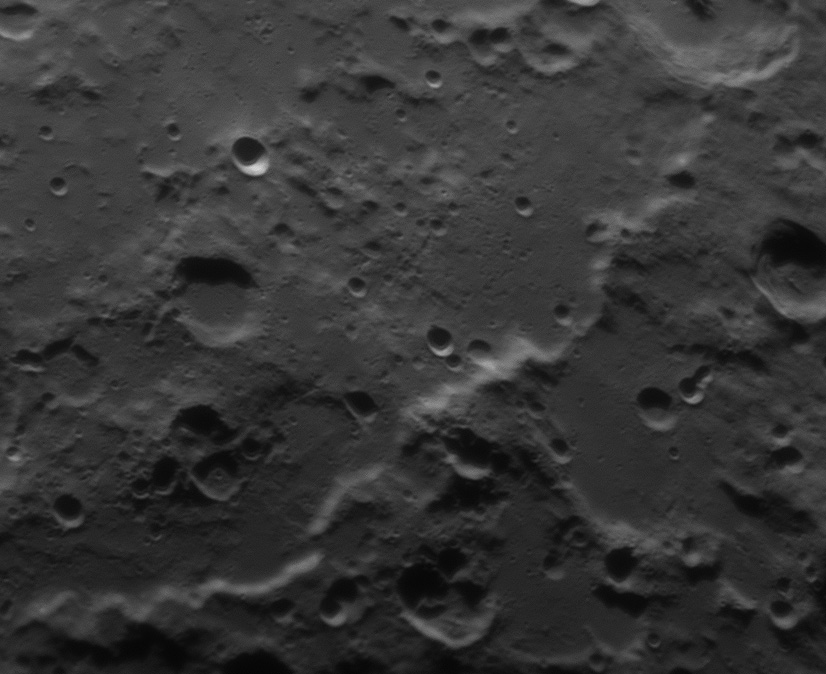
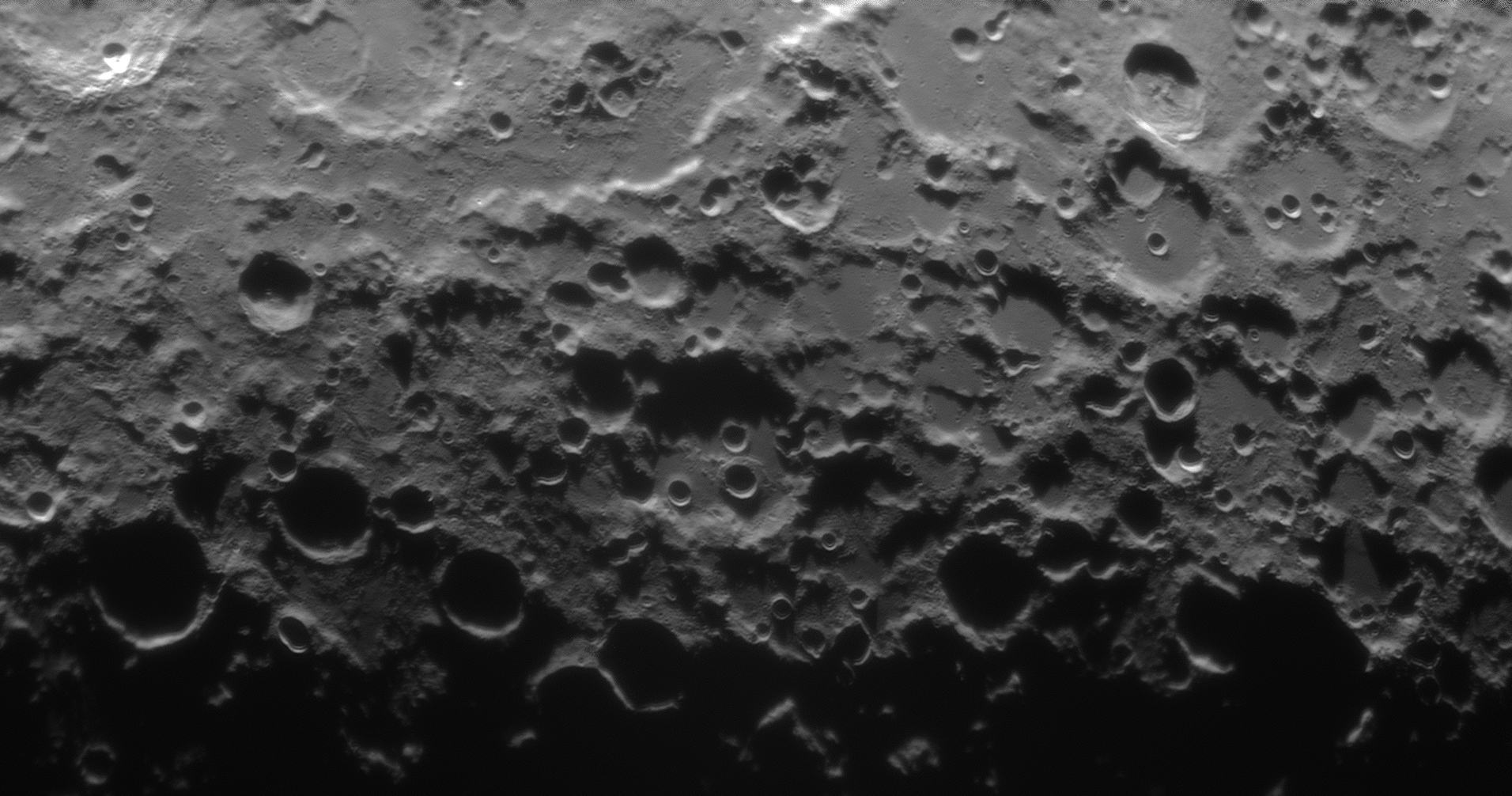
rupes altai 9/13/2021 02:54 UTC 

the distinctive curved white line is called rupes altai, a ridge that can be best seen in the lunar morning with the sun shining on it's face (5 days after the new moon), or in the lunar evening with it casting shadows (4 days after the full moon).

nearly 500 km long and 3 to 4 km high, it's the rim of a gigantic impact basin (mare nectaris-smooth area upper left in image below)

it terminates on the right hand side at the crater piccolomini

a wider view (click on image for full size):
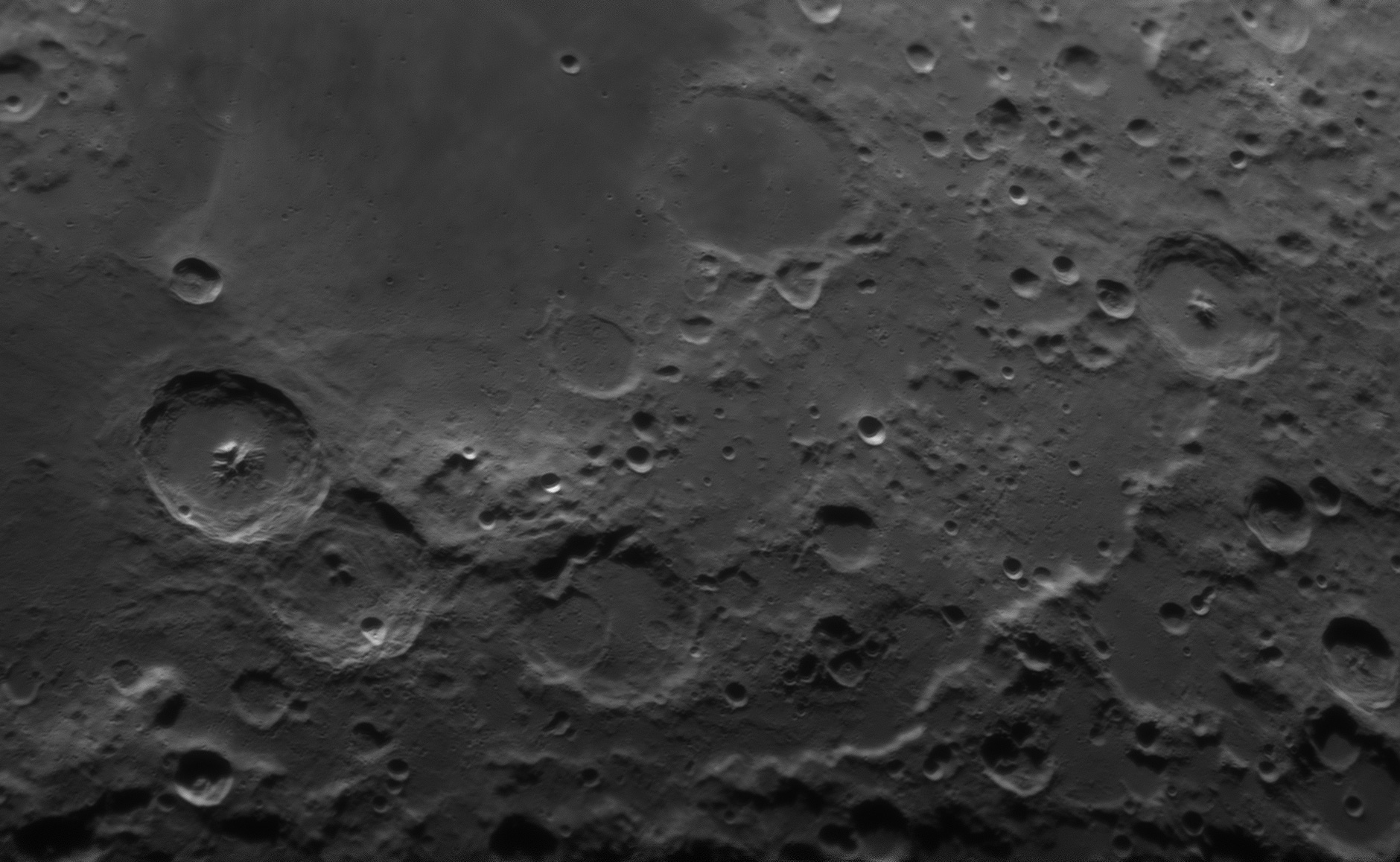
rupes altai, lower right 9/13/2021 02:54 UTC 

rupes altai, rim of giant impact basin
mare nectaris


Image details:
camera ZWO ASI 290MM 
filters: ZWO IR pass 850 
(seeing was mediocre with the 850 filter clearly sharper than a Baader IR pass "685")
celestron 11" Edge HD, no barlow
East Bluff, CA
9/13/21 02:43-03:02 UTC
moon waxing crescent 6.6 day old
FPS (avg.)=73
Shutter=12ms
Gain=251 (41%)


Friday, November 26, 2021

let the lunacy begin with john of holywood aka sacrobosco

 i know very little about the moon, but once in a while i'll turn my planetary rig to the really bright thing in the night sky.  my usual approach is to take pictures of cool looking stuff, then learn what i've captured later.

Craters within craters caught my eye here:

sacrabosco 9/13/2021 02:43 UTC

The age of a lunar object is often estimated by how many craters there are.  so craters filled with other craters are probably old structures.  the soft cratered rim also looks old.  It took me quite a while to identify the central crater:

"Sacrobosco is an irregular lunar impact crater that is...a readily identified feature due to the three circular craters that lie on its floor." (err not so readily by me) wikipedia

Named after John of Holywood, Johannes Sacrobuschus Sacrobosco - British astronomer, mathematician (c. 1200-1256). ref

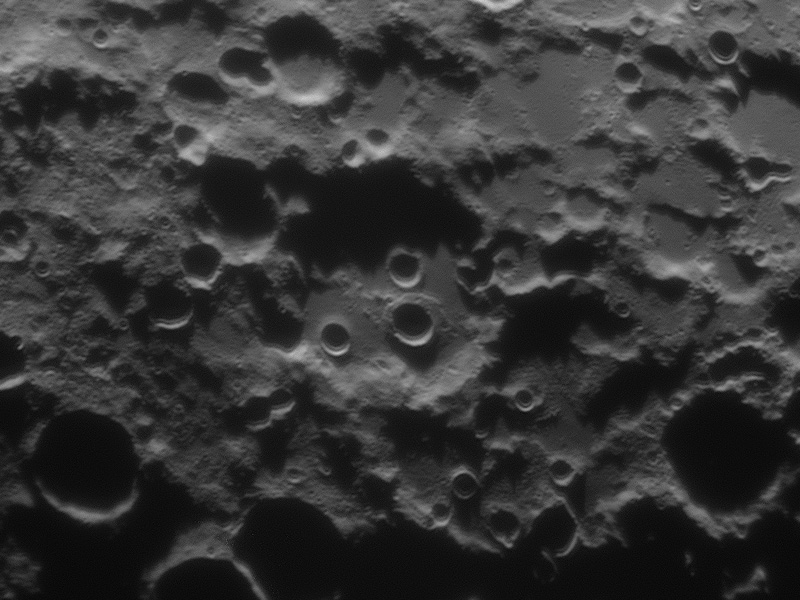
here's a wider view, click on the image for a full screen moon walk:

sacrabosco 9/13/2021 02:43 UTC

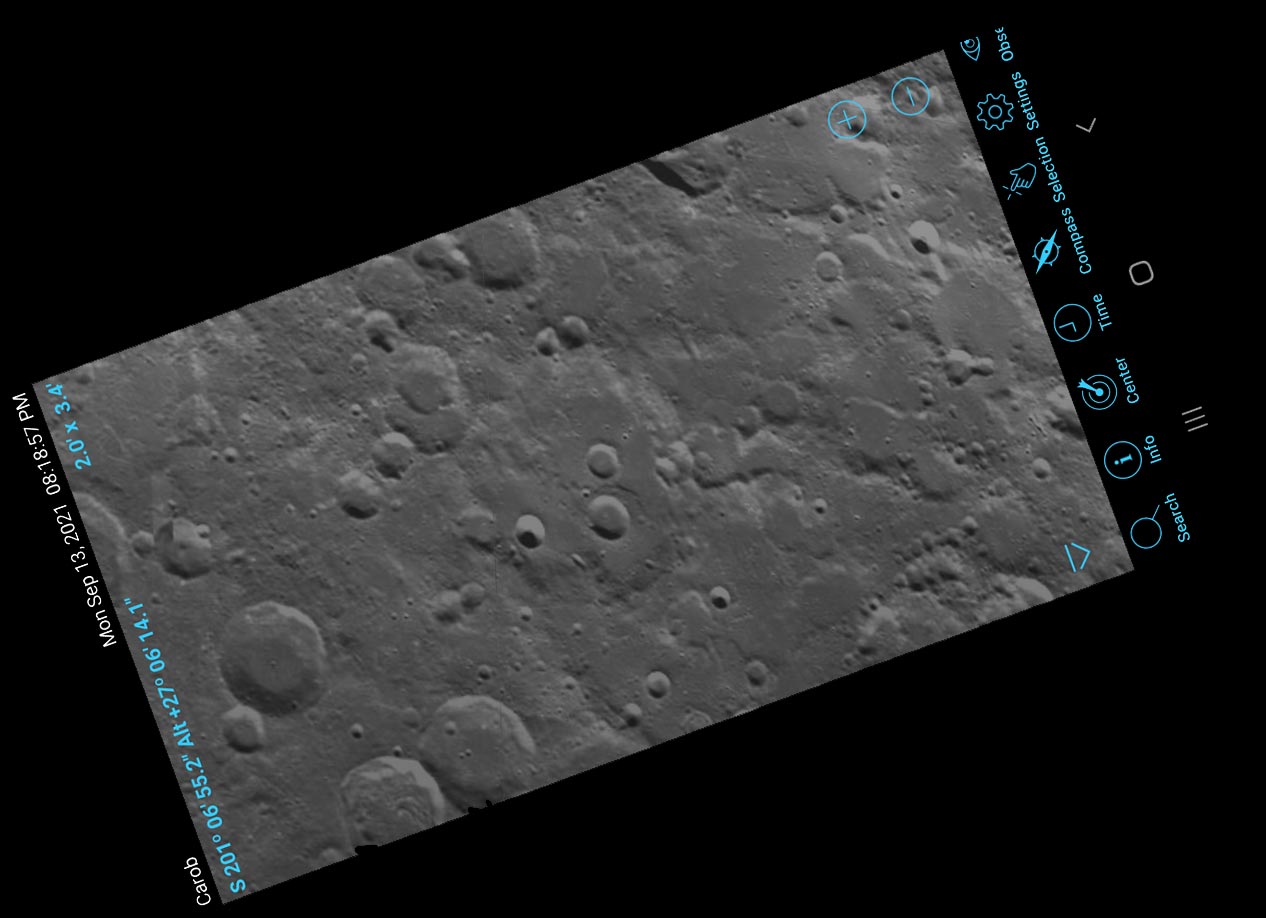
lunar surface detail is best photographed near the terminator (dividing line between light and dark) as the enhanced contrast brings out detail.  the problem with that is that most lunar atlases have a bright full moon view with a black shadow overlay, but no actual shadows on the surface.  here's the atlas view of the central crater:  


note that the 3 internal craters are easily visible, but the larger and much older crater is difficult to see without the sun's contrast bringing out its soft edges.  i was only able to identify it by finding the bright ridge at the top of the larger image and working backwards...

UPDATE:
i just found the needed site:
nasa's scientific visualization studio
gives relatively high resolution images with appropriate shading based on date as well as some labels
https://svs.gsfc.nasa.gov/4874
(wish i'd found it earlier)

Image details:
camera ZWO ASI 290MM 
filters: ZWO IR pass 850 
(seeing was mediocre with the 850 filter clearly sharper than a Baader IR pass "685")
celestron 11" Edge HD, no barlow
East Bluff, CA
9/13/21 02:43-03:02 UTC
FPS (avg.)=73
Shutter=12ms
Gain=251 (41%)

Thursday, November 11, 2021

Venus in infrared and ultraviolet 9/13/21

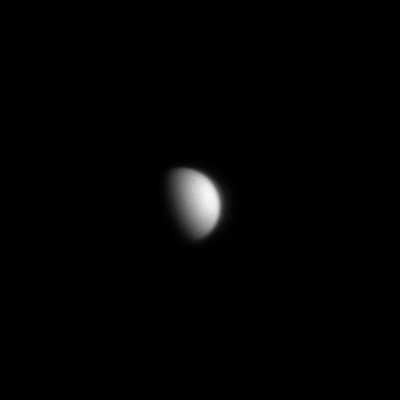
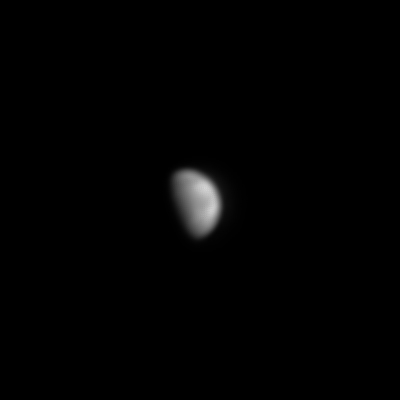
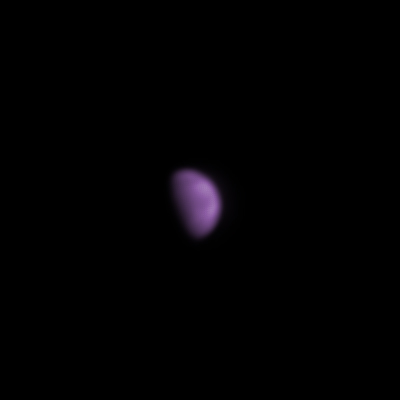
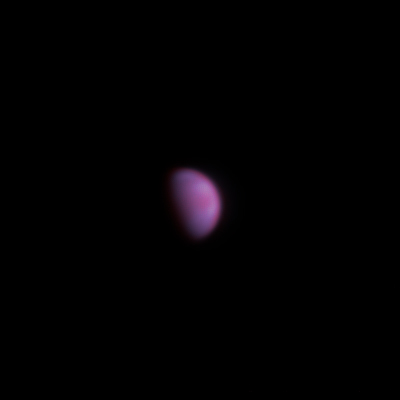
Here are several images of venus captured with infrared and ultraviolet filters. UV  light shows cloud structure which cannot be seen in the visible spectrum while IR in this case gives a sharper image, but no cloud detail:

Venus IR 9/13/21

Venus UV 9/13/21

Venus UV (colorized) 9/13/21

Venus IR as red, UV as violet 9/13/21

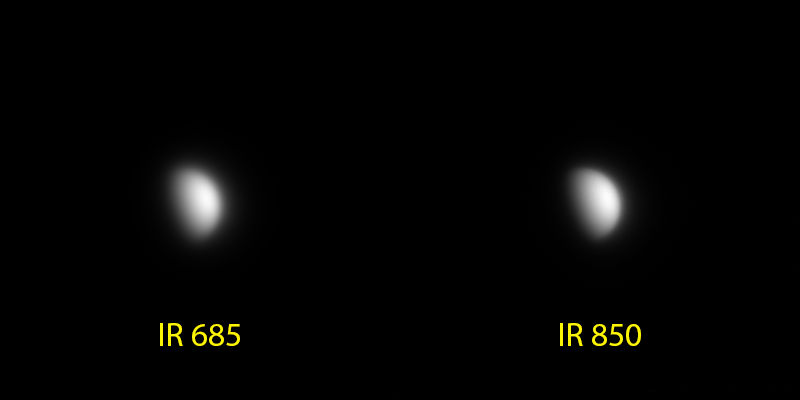
the seeing was fair to poor.  my intent this day was to image mercury, but i could not locate it during daylight with my overloaded mount.  here are the raw stacks with two different IR pass filters one at 685 nm, the other 850 nm.  the 850 being further into the infrared is generally preferred for mercury or poor seeing conditions, the latter being the case here:

Venus IR (raw stack) 9/13/21


Image details:
camera ZWO ASI 290MM 
filters: Baader IR pass "685", ZWO IR pass 850, Baader U-filter bw 320-380nm
celestron 11" Edge HD, no barlow
East Bluff, CA
9/13/21 00:13-02:17 UTC

685 filter:
FPS (avg.)=212
Shutter=0.101ms
Gain=234 (39%)
850 filter:
FPS (avg.)=20
Shutter=1.351ms
Gain=234 (39%)
UV filter:
FPS (avg.)=201
Shutter=4.952ms
Gain=351 (58%)